
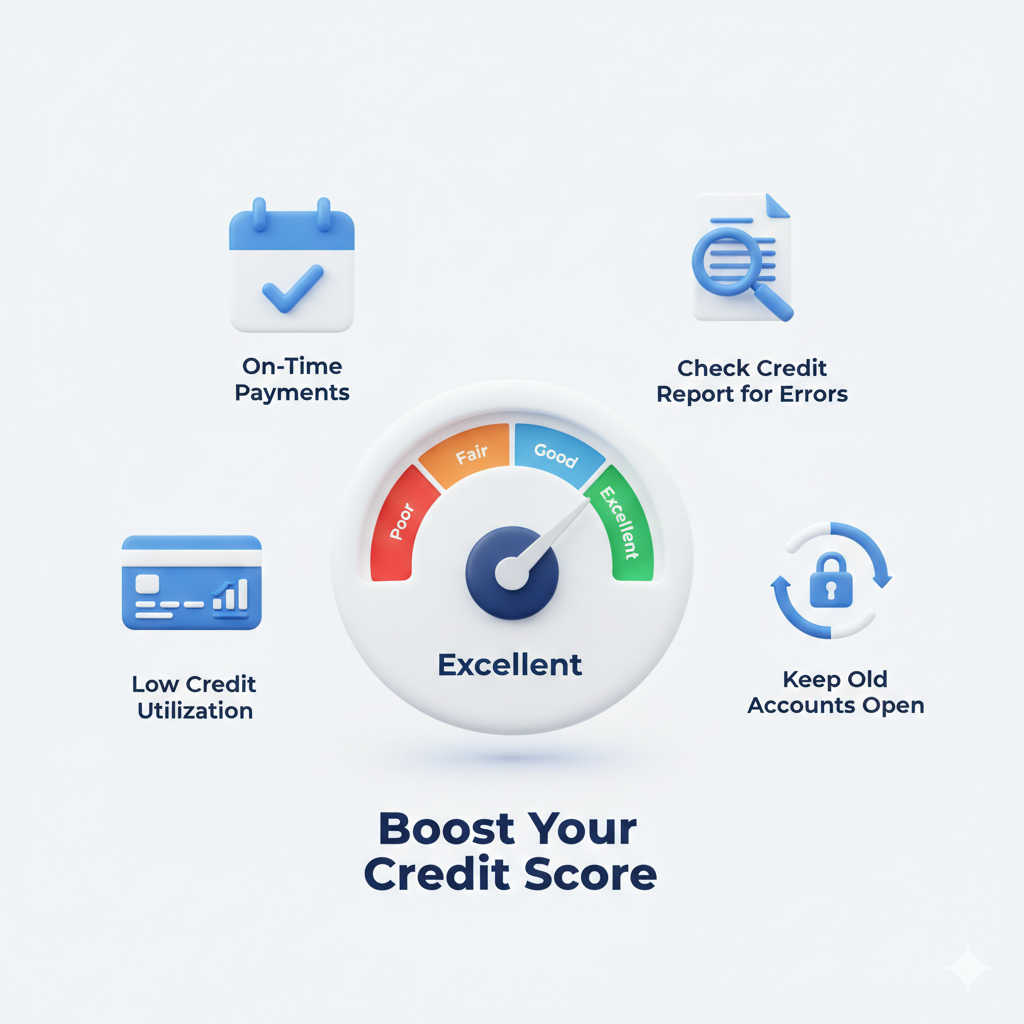
1. Pay Every Bill on Time (Most Important)
Payment history makes up 35% of your FICO score.
Even one late payment can hurt.
Tips
Set up autopay for at least the minimum due
Pay before the due date, not on it
Catch up ASAP if you miss a payment
2. Keep Credit Utilization Below 30%
Credit utilization = how much credit you’re using vs. how much you have.
Best practice
Below 30% is good
Below 10% is excellent
Example:
If your limit is $10,000 → keep balances under $3,000.
3. Don’t Close Old Credit Cards
Length of credit history matters (15% of your score).
Old accounts help your average age
Closing them can increase utilization
👉 Keep old cards open, even if you rarely use them.
Related Topic Ads
4. Limit New Credit Applications
Each hard inquiry can slightly lower your score.
Avoid applying for multiple cards or loans at once
Space applications at least 3–6 months apart
5. Check Your Credit Report for Errors
Many Americans have errors on their credit reports.
You can get free reports from:
Experian
Equifax
TransUnion
Dispute:
Incorrect late payments
Accounts you don’t recognize
Wrong balances or limits
6. Become an Authorized User (If Possible)
Being added to a well-managed credit card can help fast.
Best if the account:
Has a long history
Low balance
Perfect payment record
7. Use Credit-Builder Tools
Good options if you’re rebuilding or new to credit:
Secured credit cards
Credit-builder loans
Services like Experian Boost (adds utility/phone payments)
8. Maintain a Healthy Credit Mix
Having different types of credit helps:
Credit cards
Auto loans
Student loans
Mortgages
You don’t need all—just manage what you have responsibly.
How Long Does It Take to See Improvement?
30–60 days: small improvements (lower utilization, on-time payments)
3–6 months: noticeable score growth
6–12 months: major recovery if habits stay consistent
Final Tip
Improving your credit score isn’t about shortcuts—it’s about consistency.
On-time payments + low balances = long-term success 📈
