
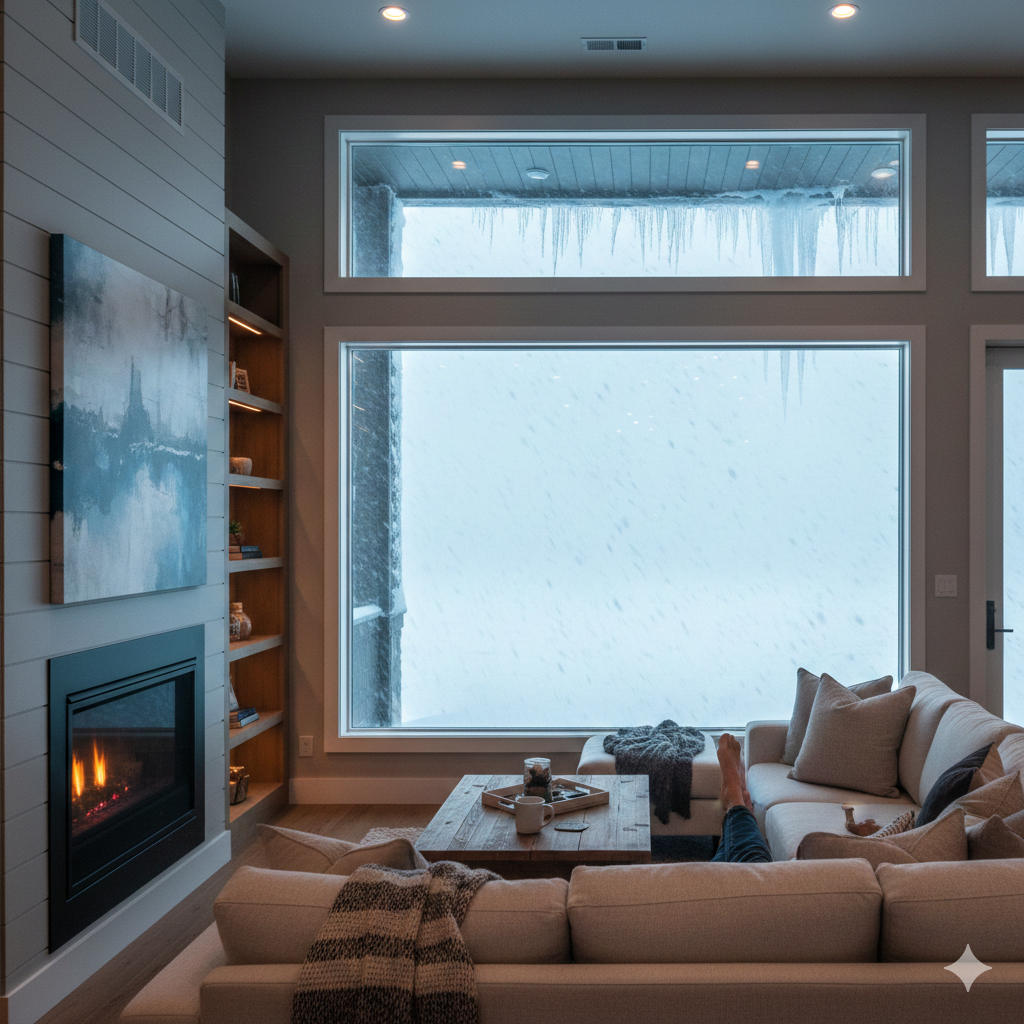
When a Lake Effect Snow Warning hits, most people think about bread, milk, and salt. But for a homeowner, the real concern isn’t what’s in the fridge—it’s whether the structure over your head can handle the sudden, massive weight of several feet of snow.
Lake-effect snow is notoriously heavy and fast. Unlike a typical winter storm, it can dump 2 to 4 inches of snow per hour, putting your home under intense stress in a matter of hours.
Here are the three critical areas where heavy snow exposes home “weaknesses,” and what you should look for before the next band hits.
1. The Roof: How Much Weight is Too Much?
Most modern residential roofs are designed to handle about 20 pounds per square foot. While that sounds like a lot, the math changes quickly with lake-effect snow:
Fresh Snow: You can usually handle 3 to 4 feet of light, fluffy snow.
Packed/Wet Snow: If the snow is dense or has been sitting, just 1 to 2 feet can reach that 20lb limit.
The Danger Sign: If you hear unusual creaking, popping sounds, or if interior doors suddenly start “sticking” in their frames, your roof may be overstressed.
Pro Tip: Don’t wait for a collapse. A professional structural reinforcement or a roof “tune-up” can save you from a catastrophic insurance claim.
2. The Attic: The “Ice Dam” Warning
Have you noticed giant, picturesque icicles hanging from your gutters? They may look pretty, but they are a sign of poor attic insulation.
When heat escapes from your home into the attic, it melts the bottom layer of snow on your roof. That water runs down to the cold eaves and freezes, forming an ice dam. This ridge of ice traps water, forcing it under your shingles and into your drywall.
The Solution: Proper blown-in insulation and ridge venting. Upgrading your insulation doesn’t just lower your heating bill; it prevents the cycle of water damage that destroys ceilings and walls.
3. The Foundation: The “Great Melt” Risk
In lake-effect zones, we don’t just worry about the snow falling—we worry about it melting. Three feet of snow on your lawn is thousands of gallons of water waiting to happen. If your yard isn’t graded correctly or your sump pump is outdated, that water will find the path of least resistance: your basement.
Checklist for the Thaw:
Are your downspouts clear and extending at least 5 feet from the house?
Does your sump pump have a battery backup for when the heavy snow knocks the power out?
Why Winter is the “Secret Season” for Interior Renovation
While it’s too cold to pour concrete, winter is actually the best time to start an interior remodel.
Shorter Lead Times: Most homeowners wait until spring to call a contractor. By booking your kitchen or bath remodel during a snow warning, you beat the April rush.
Stable Humidity: Dry winter air is actually ideal for installing hardwood floors and painting, as materials settle and dry more predictably.
The “Sanctuary” Factor: If you’re going to be snowed in, you might as well be snowed in in a home you love.
🛡️ Get a Free “Winter Home Health” Audit
Don’t let the next Lake Effect Snow Warning leave you wondering if your roof will hold. Whether you need an insulation upgrade to stop ice dams or you’re ready to transform your interior while the world is white outside, we’re here to help.
